How to Achieve Higher Customer Satisfaction Scores (A Complete Guide)
Customer satisfaction scores are a cornerstone metric for organizations seeking growth, loyalty, and sustained competitive advantage. In today's digital landscape, customer expectations evolve rapidly.
The seamlessness, accuracy, and availability of support documentation can significantly influence a customer's overall perception of a brand.
This article details how organizations can systematically boost customer satisfaction scores by leveraging cutting-edge, and AI-native documentation tools.
Key Takeaways
- High CSAT is a Cornerstone Metric: Achieving high customer satisfaction scores is essential for driving business growth, increasing customer loyalty, and reducing churn.
- Outdated Documentation Kills Satisfaction: The primary driver of low CSAT is often outdated, fragmented, and hard-to-find support documentation, which leads to customer frustration.
- AI-Powered Self-Service is the Solution: Modern customers prefer to solve issues themselves. AI-native documentation platforms provide the instant, accurate answers they expect, significantly boosting satisfaction.
- Automation Delivers Quantifiable Results: Tools like InstantDocs AI knowledge base software automate content creation and updates, leading to measurable improvements like a 40% drop in repetitive support tickets and a 73% increase in user satisfaction.
- Sustaining High CSAT Requires a Strategy: Maintaining high satisfaction is an ongoing process that requires a data-driven approach and a culture that prioritizes keeping documentation consistently accurate and helpful.
Understanding Customer Satisfaction Scores and Their Impact
Customer satisfaction (CSAT) scores measure how well a company meets or exceeds customer expectations.
High scores translate into increased loyalty, positive word-of-mouth, and lower churn rates.
Conversely, low CSAT scores impact revenue, hinder reputation, and increase costs related to customer recovery and retention.
- Definition: CSAT typically involves post-interaction surveys, feedback forms, or Net Promoter Scores (NPS) that gauge the likelihood of a customer recommending your service or product.
- Importance: A single negative experience or an unsolved inquiry can rapidly impact public perception, especially with the prevalence of online reviews and social media.
Common Barriers to High Customer Satisfaction
Organizations often encounter the following challenges on their path to higher CSAT scores:
- Outdated Documentation: When support resources, FAQs, and guides aren’t updated, customers face confusion and frustration.
- Fragmented Knowledge: Support content is scattered across different formats and platforms, increasing effort spent by customers seeking answers.
- High Volume of Support Tickets: Insufficient self-service increases ticket load, delays responses, and strains support teams.
- Data Blind Spots: Without robust analytics, organizations struggle to measure what content works and where customer pain points persist.
The Critical Role of Self-Service Documentation in Customer Satisfaction
Modern customers expect immediate, accurate solutions to their questions. The preference for self-service has grown exponentially due to its speed, convenience, and reliability.
Studies consistently show that customers value the ability to resolve issues themselves without engaging live support, and their satisfaction increases when support documentation surpasses expectations.
- Faster Time-to-Resolution: Easily discoverable, clearly-written guides enable customers to resolve issues on their own, minimizing frustration and boosting confidence.
- Reduced Support Costs: High-quality documentation diverts routine inquiries away from help desks, allowing support teams to focus on complex, high-impact cases.
- Scalability: As businesses grow, the ability to onboard users, address common questions, and roll out updates without scaling human effort is vital.
AI-Driven Documentation—A Paradigm Shift
Artificial Intelligence catalyzes this self-service revolution by automating the creation, review, and curation of support content.
AI-native platforms like InstantDocs are uniquely equipped to keep documentation accurate, intelligible, and aligned to dynamic product updates—ensuring customers always have access to the latest support resources.
InstantDocs: Transforming Documentation to Elevate CSAT
InstantDocs is an AI-powered knowledge base software purpose-built to simplify and accelerate the creation and management of customer-facing content.
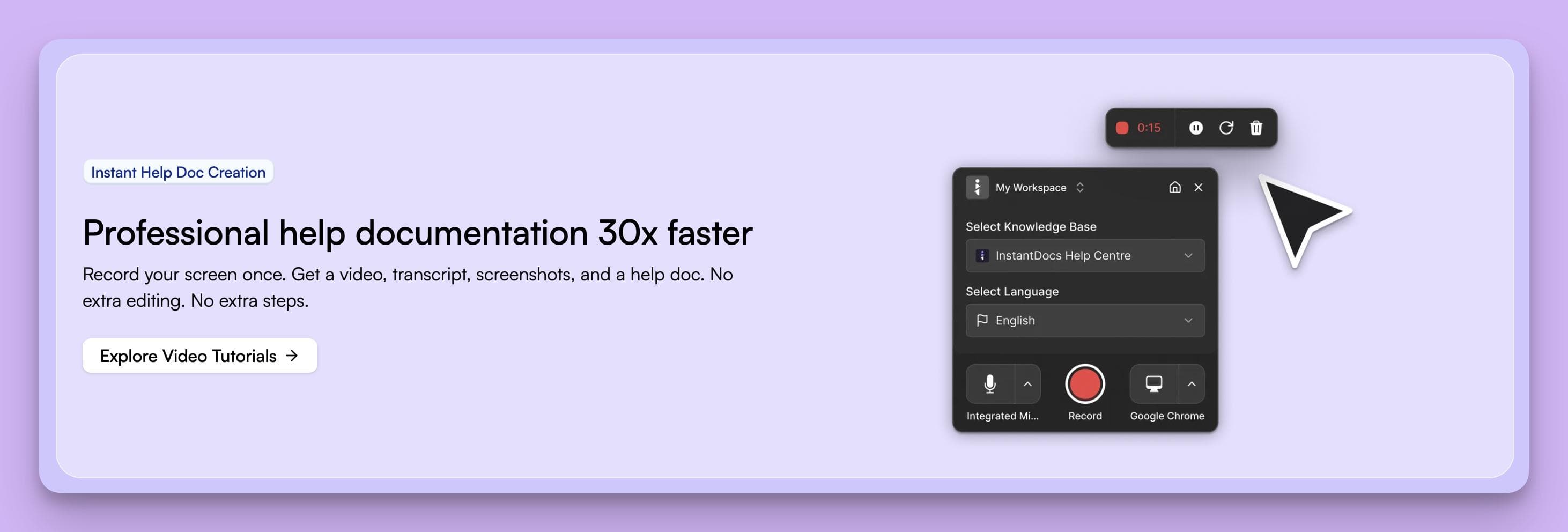
Here’s how InstantDocs addresses key pain points in the customer experience journey:
- Automated Content Creation: Transforms screen recordings, support tickets, and raw product data into step-by-step guides and polished video tutorials with minimal manual effort.
- Continuous Auto-Updates: Instantly updates documentation to reflect ongoing product changes, ensuring content stays relevant and reducing outdated information risks.
- Unified Knowledge Base: Centralizes help articles, FAQs, and guides in an easy-to-navigate, searchable portal—eliminating fragmentation.
- AI-Powered Search: Empowers users to instantly find solutions by interpreting queries contextually and suggesting the most relevant articles.
As a result, customers move more quickly from confusion to clarity—and organizations see measurable improvements across all key satisfaction indicators.
Quantifiable Impact: InstantDocs and Customer Satisfaction Metrics
Data-backed approaches are crucial in demonstrating the direct relationship between documentation excellence and customer satisfaction.
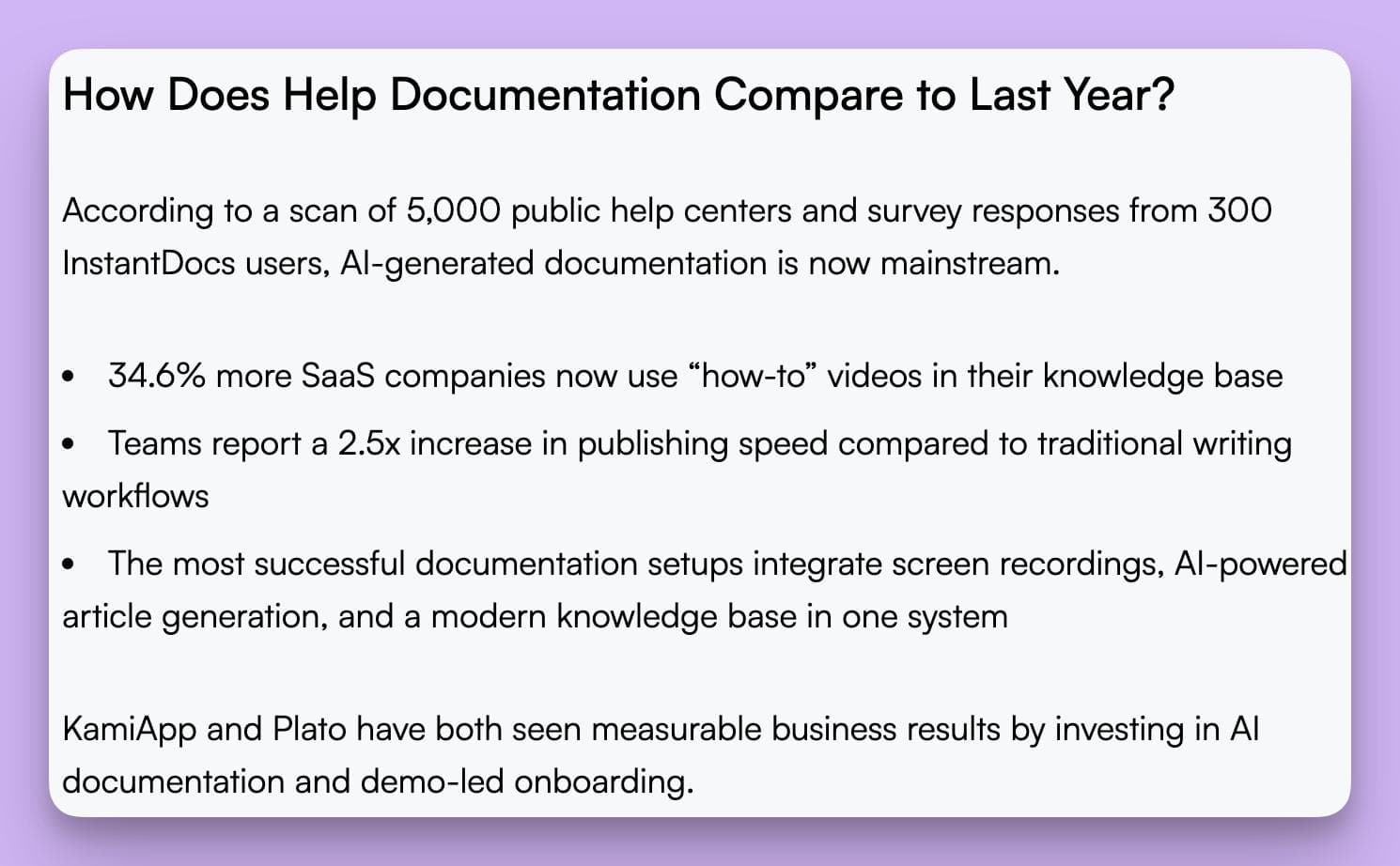
InstantDocs has enabled organizations to realize:
- 73% increase in user satisfaction: Enhanced AI search and intuitive navigation mean users find helpful answers faster.
- 92% reduction in content creation time: Automation allows organizations to keep pace with rapid product development while maintaining documentation quality.
- 40% drop in repetitive support tickets: Comprehensive, self-service knowledge cuts down direct inquiries, freeing up support agents for value-added interactions.
For example, after deploying InstantDocs, SaaS companies reported statistically significant improvements in their CSAT scores within months.
Ticket audit data showed increased first-contact resolution and sharper drops in average resolution time.
Knowledge base feedback analytics indicated better perceived clarity and usefulness, and customer retention improved as a result of reduced frustration and higher trust.
Case Studies
- Supabase – turned 3 months of tickets into 60+ polished help articles.
- Conzent ApS – reduced documentation creation time by 90%.
- Busable – saved 93+ hours by automating guide creation.
Collecting and sharing these “before and after” insights—backed by analytics—is essential for demonstrating credibility and the tangible impact on CSAT scores.
Step-by-Step Guide: Using InstantDocs to Improve Customer Satisfaction Scores
Below is a practical framework for organizations seeking to operationalize InstantDocs and attain higher customer satisfaction.
- Audit Existing Documentation: Assess current help resources for accuracy, completeness, and freshness.
- Deploy InstantDocs Platform: Set up your account and import existing guides, FAQs, and video resources.
- Automate Content Generation: Use InstantDocs to transform your support tickets, screen recordings, and onboarding documents into structured articles and video tutorials instantly.
- Customize Knowledge Base: Brand the knowledge base interface to match your organizational identity, use custom domains and ensure accessibility aligns with your audience needs.
- Integrate with Helpdesks: Seamlessly connect InstantDocs with platforms such as Zendesk, Freshdesk, Groove or Intercom to automate documentation updates on the fly.
- Train Teams: Provide quick onboarding for support and product teams to use InstantDocs for rapid documentation upkeep and continuous improvement.
- Monitor Analytics: Leverage built-in analytics to track user engagement, document effectiveness, and search term trends. Use this information to refine and optimize content.
- Iterate Based on Feedback: Encourage customers and internal users to submit feedback on articles. Routinely review suggestions and improve documentation accordingly.
Best Practices
- Maintain a feedback loop between customers and content creators.
- Schedule periodic content audits, especially after major feature releases.
- Empower frontline staff to flag documentation gaps in real time.
Sustaining High Customer Satisfaction with Strategic Documentation Practices
Customer satisfaction is not a “set and forget” metric—sustaining high CSAT scores requires ongoing vigilance and strategic investment in your support infrastructure.
Continuous improvement, enabled by smart tools and engaged teams, is critical to keeping your organization ahead of evolving customer expectations.
- Proactive Content Maintenance: Implement a schedule for routine documentation reviews. Leverage InstantDocs’ auto-update features to ensure accuracy with every product release.
- Data-Driven Optimization: Use analytics to identify question trends, common search failures, and content consumption metrics. Quickly plug any information gaps that drive negative satisfaction feedback.
- Customer Feedback Loop: Dynamically collect feedback on each article or tutorial. Value negative reviews as pointers for improvement as much as positive endorsements.
- Collaboration Across Teams: Enable product, support, and customer success teams to continuously contribute to and benefit from the knowledge base. Shared visibility increases accountability and content quality.
Cultivating a Documentation-First Culture
Organizations that excel at customer satisfaction embed documentation excellence into their DNA.
Recognize and reward team members who champion documentation quality and innovation. Celebrate CSAT improvements and use data stories to reinforce the value of knowledge-sharing.
Future Trends: AI and Automation in Customer Experience
As AI continues to reshape support functions, the future of customer satisfaction will be defined by automation, personalization, and predictive analytics.
The organizations that thrive will be those who invest early in scalable, adaptable documentation ecosystems.
Here are key trends shaping customer satisfaction strategies:
- AI-Enhanced Personalization: Next-generation systems will anticipate user needs, recommending help resources before issues arise.
- Conversational AI and Chatbots: Integration of documentation with chatbots ensures 24/7 support, context-sensitive guidance, and instant escalation for complex issues.
- Predictive Analytics: Proactively identify at-risk users through behavioral patterns and address friction points before they result in negative feedback.
- Omni-Channel Documentation Access: Seamless user experience across desktop, mobile, in-app widgets, and third-party integrations.
- Continuous Learning Systems: Platforms that evolve documentation automatically based on user behavior, feedback, and product updates.
InstantDocs is designed to support these trends, providing organizations with the tools needed to stay ahead of customer needs and expectations in a rapidly transforming environment.
Elevate Customer Satisfaction Scores with InstantDocs
Achieving and sustaining high customer satisfaction scores is a continuous journey built around clear communication, accessible support resources, and rapid resolution of customer needs.
Modern organizations face immense challenges as products evolve more quickly, customers demand instant results, and competition intensifies.
Leveraging advanced, AI-native documentation solutions like InstantDocs enables organizations to address all of these challenges head-on.
By automating content creation, maintaining relentlessly up-to-date resources, empowering customers with effective self-service, and providing deep analytics for continuous improvement, InstantDocs stands out as a powerful catalyst for CSAT improvement.
The quantifiable benefits—faster onboarding, fewer tickets, higher satisfaction, and retained customers—demonstrate the platform’s proven effectiveness.
Book a FREE demo to learn more about how your organization can transform the customer experience and increase customer satisfaction scores.
Frequently Asked Questions (FAQ)
How to increase customer satisfaction scores?
You can increase customer satisfaction scores by investing in high-quality, self-service documentation, personalizing the customer experience, and actively listening to and implementing customer feedback.
What are the 5 Ps of customer satisfaction?
The 5 Ps of customer satisfaction are Product (the quality of your offering), Price (its perceived value), Place (accessibility of your service), Promotion (clear communication), and People (the quality of your team).
What are the 3 C's of customer satisfaction?
The 3 C's of customer satisfaction are Consistency across all touchpoints, clear and proactive Communication, and a Customer-centric culture that prioritizes user needs.
How to get a high CSAT score?
To get a high CSAT score, you should focus on minimizing customer effort, providing fast and accurate resolutions to inquiries, and consistently exceeding customer expectations.
What is the 10-point customer satisfaction scale?
The 10-point customer satisfaction scale is a survey metric where customers rate their satisfaction on a scale of 1-10, which helps businesses measure sentiment and predict customer loyalty.
What are the 8 C's of customer service?
The 8 C's of customer service often include Communication, Competence, Courtesy, Credibility, Consistency, Convenience, Care, and Collaboration to ensure a comprehensive and positive support experience.


Instantly build support docs that delight.
Book a demo